Yuh ever look at di live feed at the top of this page? The one that shows wi posts as dem go out, minute by minute? Dat is Nostr. Every headline inna dat feed is a Nostr note, and you have been reading Nostr dis whole time without anybody telling you. Today wi open the hood.
Because it deserves opening. Nostr is one of the quiet important tings on the internet right now, and it was born from a question anybody who ever lose an account already know deep down: if di company own yuh name, what happens when the company change its mind?
Yuh name is rented right now
Jamaica runs on social media. The last count put 1.81 million social media identities inna di yard, 63.8 percent of the population. Facebook, Instagram, WhatsApp, X. Nearly two thirds of us live a good chunk of wi life on servers somebody else owns.
And the lease can end overnight. Brazil blocked X fi 39 days in 2024, a whole national blackout of one company's network, and the court set a fine of R$50,000 a day, about US$9,000, fi anybody who used a VPN to sneak back in. In that same season Apple told Damus, a Nostr app, that it could not let people send Bitcoin tips on individual posts inside the app, and the developer had to strip the feature out to stay listed.
Neither case is about the technology breaking. The technology worked fine. Di lesson is about power: whoever owns the server owns the conversation, and that includes yuh name, yuh follower list, and years of yuh work.
Di idea in one line
Nostr stands fi Notes and Other Stuff Transmitted by Relays. It is not an app, not a company, not a network anybody can buy into. It is a protocol, a set of rules any software can follow, first written in 2020 by a Brazilian developer who works under a pseudonym and keeps a low profile on purpose.
The whole design is three moving parts, and none of dem is a gatekeeper.
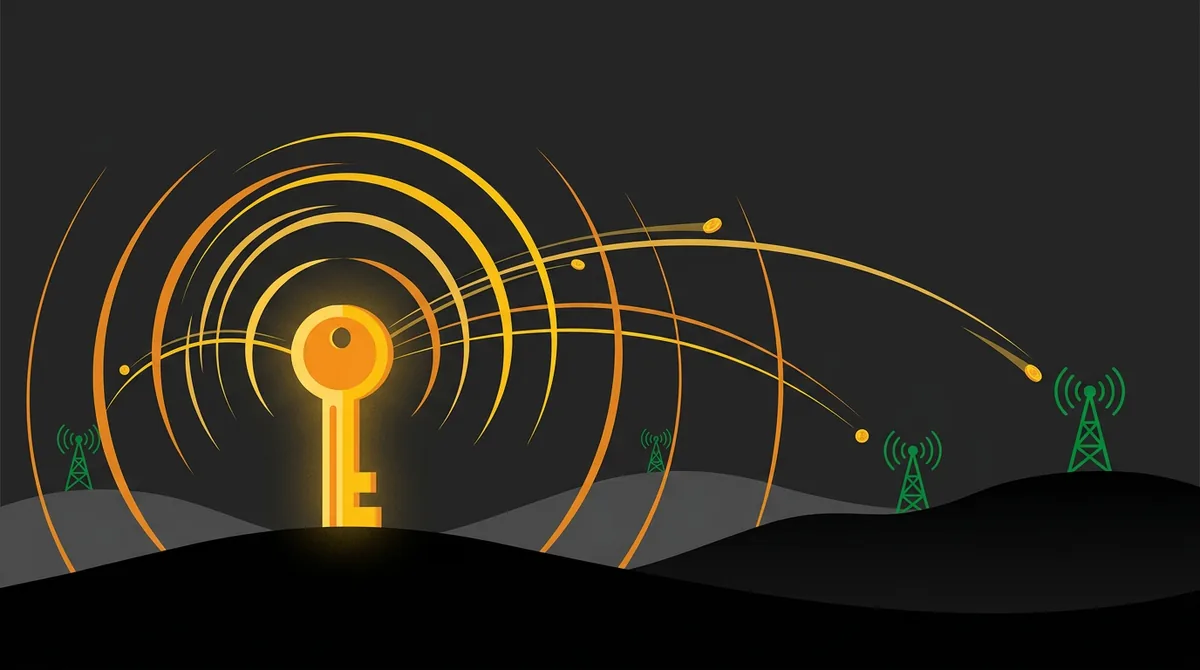
Di key. When you sign up, your software generates a pair of keys, using the same mathematics Bitcoin uses to secure coins. One key is public, called yuh npub. Dat is yuh name, yuh handle, yuh address, all in one. Share it far and wide. The other key is secret, yuh nsec, and it is the only proof that you are you. No email signup, no phone number, no password. Di key is di account. If a post carries your signature, it came from your key, full stop. No server can issue it, revoke it, or reset it.
Di relays. A relay is a simple server that stores notes and hands dem to whoever asks. Not one relay. Hundreds of dem, run by different people in different countries, and your client publishes to several at once. If one relay decides it does not want your business, the refusal is local: the same key publishes to the other relays, and your followers and your history stay right weh dem deh. A relay can refuse you, but it cannot delete you, because it never owned you inna di first place.
Di client. The client is the window you look through: Damus on iPhone, Amethyst on Android, Primal in a browser. Dem all speak the same protocol, so one npub works in every last one. Delete the app tomorrow, switch to a next one, and yuh identity and follower list travel with you, because they were never stored inna the app. They were always in di key.
That is the whole revolution. Three boring pieces, arranged so that no single hand can close di gate.
Why di Bitcoin crowd gravitates to it
Two reasons. First, the DNA is the same: own the asset, trust no custodian. Bitcoin people learn to hold their own coins instead of leaving dem on an exchange. Nostr is the same lesson applied to yuh name.
Second, money is native to it. Because identity is a key, and Lightning wallets speak to keys, you can attach a payment to a note itself. They call it a zap: you read a post, you tap, sats land in the author's wallet in seconds, no platform in the middle taking a cut, no payout threshold to clear. We did a whole piece already on how the zap money moves, so no need to rehash it here, except fi say this: every article from dis blog also goes out as a Nostr long-form post, and the zaps come back one by one, reader to writer, direct.
Di stamp of approval carries weight too. In December 2022 Jack Dorsey, the man who co-founded and ran Twitter, sent 14 BTC, about US$245,000 at the time, straight to Nostr's developer to fund the work, and later backed it with US$10 million more through a foundation. When the man who owned one of the biggest gates on the internet puts his own money behind a gateless design, that deserves a second look.
Di honest catches
Mi nah go sell you a ting without showing the cracks, because dis protocol has two real ones.
One: there is no password reset. Yuh nsec is the only key to yuh name. Lose it, and the name is gone fi good, no support desk to call. Let it leak, and anybody who holds it can post as you. If you would never text somebody yuh house key, the same rule applies here. Back it up in a password manager or on a computer you trust, and never screenshot it into a chat.
Two: it is still early. The crowd is smaller than the big platforms, some relays are better than others, and the apps are still rough in spots. Di price of owning di door is that you haffi oil di hinge yourself sometimes. Yard people know dat trade well. Plenty of us grew up watching family run business dem own way before any chain store arrive.
How fi start from di yard
Ready fi try it? Three steps, and the whole ting costs you nothing but attention.
- Pick a client: Damus on iPhone, Amethyst on Android, or Primal in any browser.
- Let it generate your key, then store yuh nsec in a password manager or on a computer you trust. Dat backup is di deed to yuh name.
- Come find us. Click the Nostr icon on any page of dis site and you land right on wi profile. From there you can watch the same feed that runs at the top of this page, but inna your own window, under your own key.
Di feed at the top of dis page and the feed inna your pocket would be the same notes, from the same key, through the same open protocol. The only difference is who owns the door. And dat, bredren, is di whole point.
Own yuh key. Own yuh name. Own di feed.